Confirm readiness
Verify substrates, environmental conditions, access, utilities, protection, and preceding work.
Serving Odessa & surrounding West Texas communities
Call 432.363.4334New-construction painting
New construction, additions, and tenant-improvement painting.
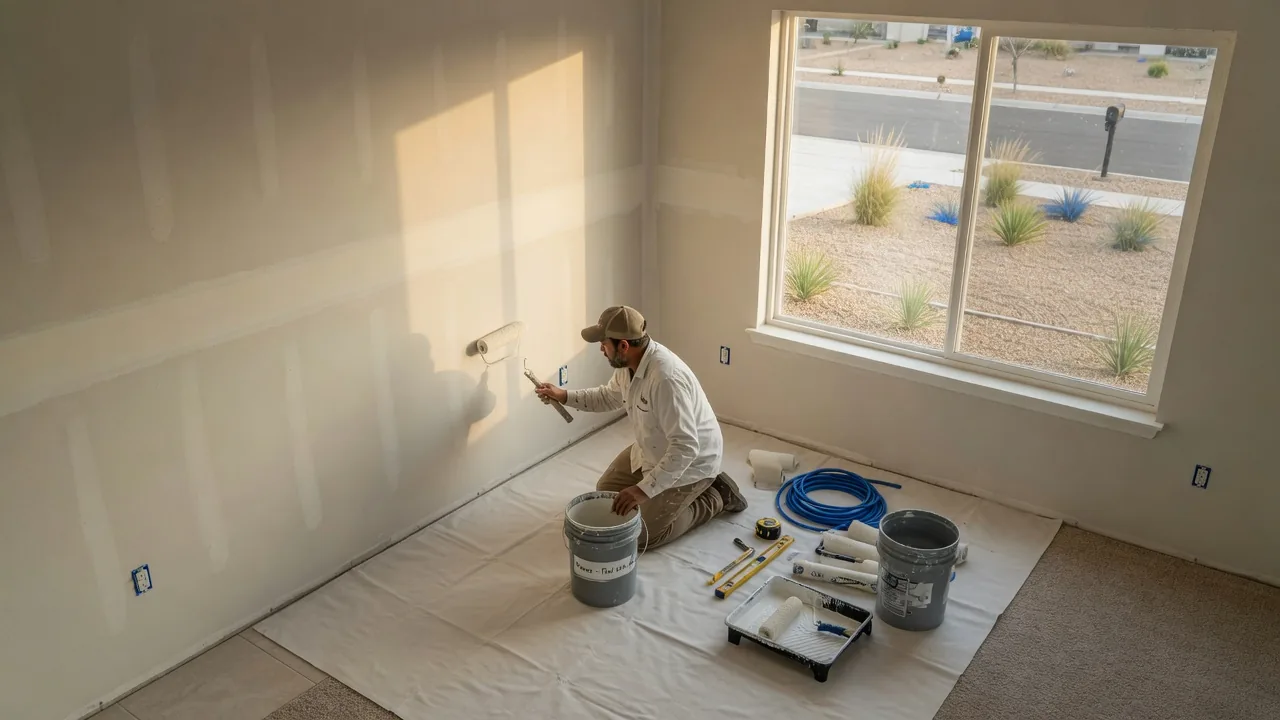
What this covers
Drawings, finish schedules, quantities, substrates, milestones, and responsibility boundaries form the estimate.
The scope may include primer, walls, ceilings, trim, doors, punch work, and final touch-ups. Substrates must be accepted, dry, clean, accessible, and ready for the specified system. Remobilization, damage by later trades, schedule compression, and changed quantities require defined handling.
How the work runs
Resolve scope gaps, alternates, exclusions, products, colors, quantities, and schedule assumptions.
Verify substrates, environmental conditions, access, utilities, protection, and preceding work.
Coordinate application, record changes, protect completed work, complete assigned punch, and close out.
New-Construction Painting questions
Plans and specifications can support estimating when they are current and sufficiently complete. Site verification, finish schedules, alternates, and clarifications may still be required.
Responsibility for trade damage, owner changes, punch, and final touch-ups should be defined in the agreement and change process.
Wet or unfinished substrates, incomplete preceding trades, missing utilities, blocked access, environmental conditions, late selections, and sequence changes can affect mobilization and completion.